
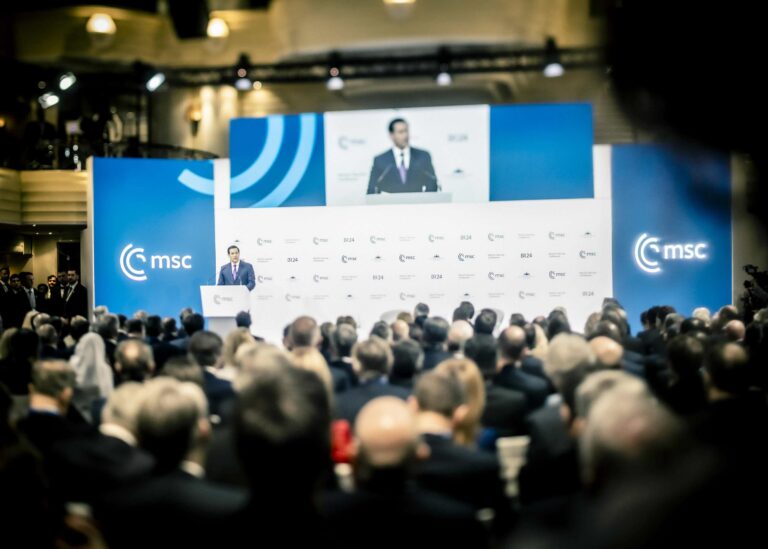
Marco Rubio's Munich Speech inspired a standing ovation
and was a masterclass in leadership and influence.
When leaders speak under pressure, they reveal how they think about history, identity, responsibility, and power. They reveal who they are. I’m not analyzing the politics of Rubio’s remarks, but would instead like to share the leadership and influence principles that underpin them. These align with what I’ve been observing in effective leaders for decades. Here are the lessons in chronological order, so you can follow them as they emerge. Some may be self-evident, but I trust that some will be new. If you have not already seen Marco Rubio’s Munich speech I highly recommend it. Video Combined Video and Transcript The first lesson appears almost immediately.
Lesson: The best leaders possess “perspective taking capacity” and grant perspective to others. They understand history, whether that is global, national, or as it relates to their industry and organization. This allows them to anchor themselves and come from a mature perspective of we’ve been here before and this too we shall overcome. Perspective taking reduces anxiety, bolsters hope, and elevates us above the mundane.
Lesson: Cleverness separates but wisdom unites. Rubio returns repeatedly to the value of unity, and the destructiveness of separation (“cleaving”). He speaks to shared history, shared challenges, shared victories, and the desire to continue to be stronger by coming together. See my article on this topic here. The fastest way for me to recognize a true leader is when I hear their desire and call for unity.
Lesson: Another critical leadership lesson is when your need goes up your power goes down. One core leadership responsibility is to keep needs low, e.g. by always having options, never overinvesting in one client, supplier, or key talent. By avoiding key man risk in startups by building a healthy leadership system instead of automatically defaulting to the hub-and-spoke culture that will emerge if not actively managed. Wise leaders ensure they never need anything too much as it distorts decision-making and destroys leverage.
Lesson: Rubio is appealing to our fundamental human need for belonging, commonality, and shared values. When we see our similarities, our willingness to be supportive of others increases. He is not challenging or scolding. He is uniting, and making it clear that the United States is willing to stand alone if necessary (keeping need low, as in Lesson 3). He is not only building belonging. He is also challenging. But belonging comes first. The lesson being that in order to withstand challenge and stay connected, we must first know that our challenger cares deeply.
Lesson: Again, Rubio is sharing motives and reframing past challenges through the lens of deep concern and positive intentions. Most people have positive intentions but are unable to anticipate the unintended consequences of those intentions. He is also asking his audience to fight for what they collectively love. It is only when we care deeply that we are willing to defend, and healthy boundaries, when put in place correctly, can be an extension of protecting what we love. In a related article, I write on the relationship between negative emotions and responsibility here.
Lesson: While I share above that cleverness separates but wisdom unites, that does not mean tolerating deleterious influences. Cleverness separates but wisdom unites on the condition that values and vision are shared. Attempting to unite those with differing interests and intentions within your organization can prove destructive, at minimum unsupportive. I share more about Leadership Empathy and Its Essential Limits here.
Lesson: Rubio is injecting hope. Research on Hope Theory (Charles Snyder 1991) states that hope can be constructed, and it requires three things: 1) an achievable goal 2) a sense of agency 3) multiple pathways. Rubio is appealing to both 1) and 2): we have done this before – and we can do it again. This is tremendously energizing.
Lesson: Rubio is elevating how his audience are seeing themselves. He is raising the bar. A key role of leadership is to raise and uphold standards and reject those that are not in support of those standards. Rubio is also creating a sense of urgency.
Lesson: Rubio is giving status to his audience by referring to Americans as children of Europe. This is tremendously uniting and reduces the potential status threat and resistance that may otherwise have been a response to his invitation.
Lesson: Rubio is embedding the seeds of Europe into America, so European leaders are seeing how protecting America is also protecting its own. Partnering with America becomes partnering with extensions of ourselves. In order to be motivated, people need to see how what they are being asked to support is somehow an extension of themselves, their identity and legacy.
Lesson: Rubio is sharing here what is true in primate behavior; that those who fight then reconcile are more strongly bonded than those that never fight at all. If you’re interested in learning more about the value of conflict and resolution I recommend reading Peacemaking Among Primates.
Marco Rubio’s Munich speech is one to remember. Speeches like this matter for the leadership lessons they reveal. These lessons can shape organizations and teams every day, and leaders who understand them influence far more effectively than those who don’t.
You can explore more leadership analysis in my Resources library, and if you’ve found this helpful please share with others.
And if you’re interested in elevating your leadership and influence, let me know.
Request your consultation →
This guide reflects Katherine Hosie‘s CEO coaching and leadership coaching observations developed over two decades at Powerhouse Coaching.
Based in Greenwich, CT and New York | Previously 12 years in San Francisco & Silicon Valley | CEO Coaching nationally.
- Great Leaders Grant Perspective
Lesson: The best leaders possess “perspective taking capacity” and grant perspective to others. They understand history, whether that is global, national, or as it relates to their industry and organization. This allows them to anchor themselves and come from a mature perspective of we’ve been here before and this too we shall overcome. Perspective taking reduces anxiety, bolsters hope, and elevates us above the mundane.
- Cleverness Separates but Wisdom Unites
Lesson: Cleverness separates but wisdom unites. Rubio returns repeatedly to the value of unity, and the destructiveness of separation (“cleaving”). He speaks to shared history, shared challenges, shared victories, and the desire to continue to be stronger by coming together. See my article on this topic here. The fastest way for me to recognize a true leader is when I hear their desire and call for unity.
- Power Diminishes When Need Rises
Lesson: Another critical leadership lesson is when your need goes up your power goes down. One core leadership responsibility is to keep needs low, e.g. by always having options, never overinvesting in one client, supplier, or key talent. By avoiding key man risk in startups by building a healthy leadership system instead of automatically defaulting to the hub-and-spoke culture that will emerge if not actively managed. Wise leaders ensure they never need anything too much as it distorts decision-making and destroys leverage.
- Leaders Create Belonging Before Challenge
Lesson: Rubio is appealing to our fundamental human need for belonging, commonality, and shared values. When we see our similarities, our willingness to be supportive of others increases. He is not challenging or scolding. He is uniting, and making it clear that the United States is willing to stand alone if necessary (keeping need low, as in Lesson 3). He is not only building belonging. He is also challenging. But belonging comes first. The lesson being that in order to withstand challenge and stay connected, we must first know that our challenger cares deeply.
- Leaders Reframe Conflict and Share Motives
Lesson: Again, Rubio is sharing motives and reframing past challenges through the lens of deep concern and positive intentions. Most people have positive intentions but are unable to anticipate the unintended consequences of those intentions. He is also asking his audience to fight for what they collectively love. It is only when we care deeply that we are willing to defend, and healthy boundaries, when put in place correctly, can be an extension of protecting what we love. In a related article, I write on the relationship between negative emotions and responsibility here.
- Leaders Protect
Lesson: While I share above that cleverness separates but wisdom unites, that does not mean tolerating deleterious influences. Cleverness separates but wisdom unites on the condition that values and vision are shared. Attempting to unite those with differing interests and intentions within your organization can prove destructive, at minimum unsupportive. I share more about Leadership Empathy and Its Essential Limits here.
- Leaders Inject Hope Through Agency and Precedent
Lesson: Rubio is injecting hope. Research on Hope Theory (Charles Snyder 1991) states that hope can be constructed, and it requires three things: 1) an achievable goal 2) a sense of agency 3) multiple pathways. Rubio is appealing to both 1) and 2): we have done this before – and we can do it again. This is tremendously energizing.
- Leaders Raise Standards and Elevate Identity
Lesson: Rubio is elevating how his audience are seeing themselves. He is raising the bar. A key role of leadership is to raise and uphold standards and reject those that are not in support of those standards. Rubio is also creating a sense of urgency.
- Leaders Give Status
Lesson: Rubio is giving status to his audience by referring to Americans as children of Europe. This is tremendously uniting and reduces the potential status threat and resistance that may otherwise have been a response to his invitation.
- Leaders Embed Shared Identity Narratives
Lesson: Rubio is embedding the seeds of Europe into America, so European leaders are seeing how protecting America is also protecting its own. Partnering with America becomes partnering with extensions of ourselves. In order to be motivated, people need to see how what they are being asked to support is somehow an extension of themselves, their identity and legacy.
- Leaders Understand Conflict+Reconciliation Strengthens Bonds
Lesson: Rubio is sharing here what is true in primate behavior; that those who fight then reconcile are more strongly bonded than those that never fight at all. If you’re interested in learning more about the value of conflict and resolution I recommend reading Peacemaking Among Primates.
Marco Rubio’s Munich speech is one to remember. Speeches like this matter for the leadership lessons they reveal. These lessons can shape organizations and teams every day, and leaders who understand them influence far more effectively than those who don’t.
You can explore more leadership analysis in my Resources library, and if you’ve found this helpful please share with others.
And if you’re interested in elevating your leadership and influence, let me know.
Request your consultation →
This guide reflects Katherine Hosie‘s CEO coaching and leadership coaching observations developed over two decades at Powerhouse Coaching.
Based in Greenwich, CT and New York | Previously 12 years in San Francisco & Silicon Valley | CEO Coaching nationally.
Photo: Munich Security Conference (MSC)
Connect with me on LinkedIn.
